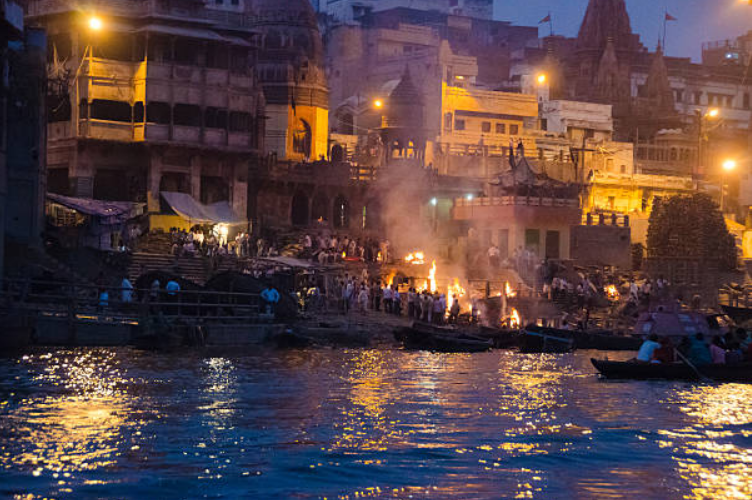
 Manikarnika Ghat, Varanasi
Manikarnika Ghat, Varanasi - The Eternal Flame of Life and Liberation
Manikarnika Ghat is Varanasi’s most sacred cremation ghat where the eternal flame burns continuously. It is believed that those cremated here attain moksha, making it a deeply spiritual place. Visitors experience ancient rituals, powerful energy, and a strong sense of life’s truth along the Ganga River.
Manikarnika Ghat, Varanasi
Manikarnika Ghat is one of the oldest, most sacred, and spiritually powerful ghats in Varanasi. Known as the “Mahashamshan” or the great cremation ground, it is a place where the philosophy of life and death becomes visible in its purest form.
Hindus believe that cremation at Manikarnika leads to moksha-the liberation from the endless cycle of birth and rebirth. This belief makes the ghat one of the holiest destinations for those seeking spiritual peace.
Situated on the banks of the sacred Ganga River, the ghat operates day and night. The cremation fire here, known as the Akhand Dhuni, is believed to have been burning continuously for thousands of years, symbolising the eternal nature of the soul.
History & Significance
Manikarnika Ghat holds great importance in Hindu mythology. According to ancient legends:
Goddess Parvati lost her earring, known as Manikarnika, at this spot while bathing with Lord Shiva.
When Shiva searched for it, he declared this location sacred for all time.
It is believed that Shiva whispers the Taraka Mantra into the ears of those who die in Varanasi, helping their soul reach liberation.
Historically, the ghat has been maintained by several dynasties, including the Marathas, and remains a deeply spiritual ground where rituals and traditions have been preserved for centuries.
What to Experience at Manikarnika Ghat
1. The Eternal Flame (Akhand Dhuni): This sacred fire has been kept alive for generations. Families performing cremation take the flame from this fire, symbolizing continuity and eternal life.
2. Traditional Cremation Rituals: Cremations are performed following ancient Hindu customs. You will see priests (Dom community) conducting rituals, chanting mantras, and guiding families through the sacred process.
3. A Powerful, Transformative Atmosphere: The air is filled with chanting, prayers, and a deep sense of spirituality. Visitors often describe the experience as emotional and enlightening, reminding them of the impermanence of life.
4. Boat View on the Ganga: Many travellers prefer to observe the ghat from a boat. This gives a respectful and peaceful perspective, especially during sunrise or sunset, when the entire riverside glows with golden light.
Best Time to Visit
- Early morning (sunrise): Perfect for peaceful views and boat rides.
- Evening: Ideal for observing the illuminated ghats and experiencing the ambience from a distance.
- Avoid staying too close to the rituals unless mentally prepared-it is a deeply sacred and emotional space.
Nearby Places to Visit
1. Dashashwamedh Ghat: Famous for the Ganga Aarti, one of the most spectacular spiritual ceremonies in India. Read more..
2. Kashi Vishwanath Temple: One of the Twelve Jyotirlingas, this temple is the heart of Varanasi’s spiritual life. Read more..
3. Manikarnika Kund (Manikarnika Well): Believed to be created by Lord Vishnu’s chakra, this ancient well holds deep mythological significance.
4. Scindia Ghat: Known for its partly submerged temple that leaned due to soil collapse, creating a mystical and photogenic sight.
5. Ramnagar Fort: Located across the river, the fort offers a fascinating glimpse into the royal heritage of Varanasi.
Varanasi Package Tour - Click here
 Gandhi Smriti - Remembering the ..
 Aina Mahal - The Palace of Mirro..
 Hot Springs (Brahmakund), Rajgir..
 Vikramshila - The Lost Ancient U..
 Sankat Mochan Hanuman Temple, Va..
 Dwarkadhish Temple - Mathura Tra..
 Muktinath: A Sacred Journey to t..
 Gundicha Temple, Puri - The Sacr..
 Dilli Haat Delhi - Shopping, Foo..
 Nehru Park Delhi - History, Timi..
 Prayagraj - The Sacred Confluenc..
 Lajpat Nagar Market Delhi - Shop..
 Mukteshwar - A Peaceful Himalaya..
 Ranikhet | The Queen’s Meadow ..
 Daksha Mahadev Temple Haridwar |..