 Rumi Darwaza, Lucknow
Rumi Darwaza, Lucknow - The Iconic Gateway of Awadh
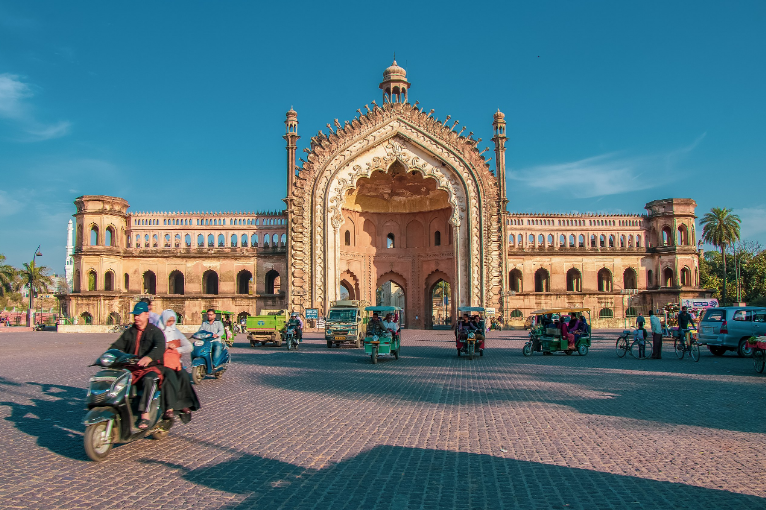
Rumi Darwaza is a historic gateway in Lucknow built in 1784 by Nawab Asaf-ud-Daula. Inspired by Turkish architecture, it reflects the grandeur of Awadhi design. Located near Bara Imambara, it is a must-visit heritage landmark.
Rumi Darwaza, Lucknow
Rumi Darwaza is one of the most iconic historical monuments of Lucknow and a proud symbol of the city’s Nawabi heritage. Located between Bara Imambara and Hussainabad, this grand gateway reflects the elegance, power, and artistic taste of the rulers of Awadh. Built in 1784 by Nawab Asaf-ud-Daula, Rumi Darwaza stands as a reminder of Lucknow’s glorious past and its rich architectural legacy.
Often referred to as the “Turkish Gate of Lucknow,” Rumi Darwaza was inspired by the famous gateways of Istanbul. Rising to a height of nearly 60 feet, the structure was originally built as an entrance to the old city of Lucknow. Today, it remains one of the most photographed monuments and a must-visit destination for history lovers, architecture enthusiasts, and travelers.
Historical Background of Rumi Darwaza
Rumi Darwaza was constructed during a severe famine in Awadh. To provide employment and food to the local people, Nawab Asaf-ud-Daula initiated several large construction projects, including Bara Imambara and Rumi Darwaza. This initiative helped thousands of people survive difficult times and also gave Lucknow some of its most remarkable monuments.
The name “Rumi” comes from Rome or Turkey (Rum), as the architectural style closely resembles Turkish designs. The gate symbolized prosperity, strength, and cultural refinement during the Nawabi era.
Architecture and Design
- Rumi Darwaza is a stunning example of Awadhi architecture with strong Mughal and Turkish influences.
- The gateway features a massive central arch adorned with beautiful floral and geometric carvings.
- There is no use of wood or iron, showcasing advanced engineering techniques of that time.
- A unique octagonal lantern (chhatri) crowns the top of the structure, adding to its charm.
- The monument was once lit by an internal oil-lamp system, making it glow at night.
- The symmetrical design and intricate detailing make Rumi Darwaza a masterpiece of 18th-century architecture.
Rumi Darwaza at Night
When illuminated after sunset, Rumi Darwaza looks truly magical. The soft lighting highlights its carvings and arch, creating a royal and romantic atmosphere. Evening is the best time for photography and heritage walks, as the monument looks even more majestic against the night sky.
Location & How to Reach
Rumi Darwaza is located in the heart of Old Lucknow, near Bara Imambara.
- By Road: Easily accessible by auto, cab, or local bus
- Nearest Railway Station: Lucknow Charbagh
- Nearest Airport: Chaudhary Charan Singh International Airport
Best Time to Visit
- October to March: Best weather for sightseeing
- Early morning or evening: Ideal for photography and avoiding crowds
Nearby Places to Visit
- Bara Imambara - Famous for Bhool Bhulaiya. Read more..
- Chota Imambara - Also known as Palace of Lights. Read more..
- Hussainabad Clock Tower - One of the tallest clock towers in India
- Picture Gallery - Displays Nawabi portraits
- Residency, Lucknow - Important site of the 1857 revolt
Why You Should Visit Rumi Darwaza
Rumi Darwaza is not just a monument; it is a gateway to Lucknow’s culture, history, and elegance. Whether you are a traveler, historian, or photographer, this iconic structure offers a deep connection to the Nawabi era and the soul of the city.
 Madan Mohan Temple Vrindavan –..
 Ram Raja Temple, Orchha - A Sacr..
 Thiruvananthapuram - Kerala’s ..
 Kochi Tourism - Best Places to V..
 Birla Mandir Mathura - Complete ..
 Pangong Tso (Pangong Lake) Trave..
 Janeshwar Mishra Park, Lucknow -..
 Darbar Hall Museum, Junagadh - A..
 Ujjain: The Ancient Spiritual Ci..
 Bundi - The Hidden Gem of Rajast..
 Chennai - Explore Beaches, Templ..
 Ayodhya: The Sacred City of Fait..
 Best Places to Visit in Kufri: C..
 Must Visit places in Vrindavan, ..
 BHU Campus, Varanasi - A Green, ..