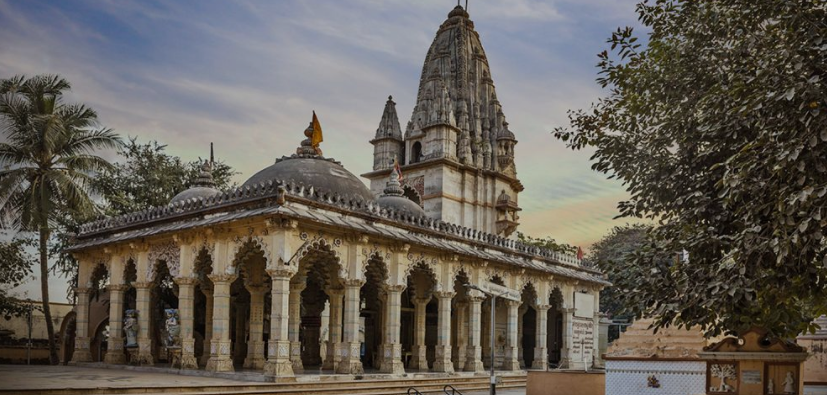
 Takht Sri Damdama Sahib Gurudwara in Talwandi Sabo, Bathinda
Takht Sri Damdama Sahib: The Guru Ki Kashi of Sikhism
Takht Sri Damdama Sahib is not just a religious site but a symbol of knowledge, equality, and spiritual authority in Sikhism. Its historical legacy, peaceful environment, and deep spiritual meaning make it a must-visit destination for anyone interested in Sikh culture and Indian history.
Religious Significance of Takht Sri Damdama Sahib
Takht Sri Damdama Sahib is one of the five sacred Takhts of Sikhism, located in Talwandi Sabo, Bathinda district, Punjab. This holy site is famously known as Guru Ki Kashi, meaning a great center of Sikh learning. It holds immense religious importance as Guru Gobind Singh Ji stayed here and finalized the Guru Granth Sahib, making it a cornerstone of Sikh history
History of Takht Sri Damdama Sahib
The history of Takht Sri Damdama Sahib dates back to 1706, when Guru Gobind Singh Ji visited Talwandi Sabo after the Battle of Muktsar. Guru Ji stayed here for nearly nine months and dictated the complete version of Guru Granth Sahib Ji to Bhai Mani Singh Ji.
This place became a major center of Sikh education, where Guru Ji trained scholars and spread the teachings of Sikhism. Due to its academic importance, it earned the title Guru Ki Kashi.
Why Takht Sri Damdama Sahib Is Called Guru Ki Kashi
Takht Sri Damdama Sahib is called Guru Ki Kashi because:
- It served as a center of Sikh learning
- Sikh scriptures were taught and interpreted here
- Scholars were trained under Guru Gobind Singh Ji
Just as Kashi is known for Hindu education, Damdama Sahib became the heart of Sikh knowledge.
Architecture of Takht Sri Damdama Sahib
The Gurudwara complex features classic Sikh architecture, including:
- White marble structure
- Golden domes
- A large Sarovar (holy water tank)
- Spacious Langar Hall
The serene environment makes it ideal for meditation and prayer.
LOCATION
Talwandi Sabo, Bathinda, Punjab
How to Reach
- By Road: Well-connected from Bathinda
- By Rail: Nearest railway station – Bathinda Junction
- By Air: Nearest airport – Bathinda Airport
Best Time to Visit
- October to March
- During Gurpurabs and Sikh festivals
 Swaminarayan Mandir, Junagadh - ..
 Experience the Golden Beauty of ..
 Khardung La Pass Travel Guide, H..
 Hazratbal Shrine Srinagar: Histo..
 Khusro Bagh, Prayagraj - A Hidde..
 Lucknow Zoo - A Perfect Wildlife..
 Diu: The Island of Serenity and ..
 Sudama Setu - The Bridge of Frie..
 BHU Campus, Varanasi - A Green, ..
 Konark Sun Temple: The Magnifice..
 Nizamuddin Dargah Delhi - Timing..
 Rajkot, Gujarat - The Cultural a..
 Jageshwar Travel Guide: Explore ..
 Yercaud - Serene hill station in..
 Pacific Mall Delhi - Shopping, F..