 Dhamek Stupa Sarnath
Dhamek Stupa - The Sacred Heart of Sarnath
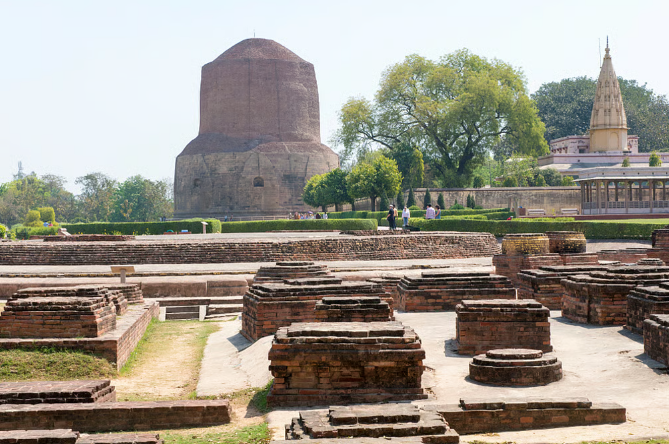
Dhamek Stupa is the holiest monument in Sarnath, marking the exact spot where Buddha gave his first sermon after enlightenment. Its massive structure, ancient carvings, and peaceful surroundings make it a powerful symbol of Buddhism’s origins. A must-visit for pilgrims, history lovers, and travelers seeking calm and spiritual depth.
Dhamek Stupa
Dhamek Stupa is the most important and iconic monument in Sarnath, standing as a powerful reminder of the moment when Lord Buddha delivered his first sermon. This is the place where the Dharmachakra-the Wheel of Dharma-was set into motion, making it one of the holiest Buddhist sites in the world.
Located just 10 km from Varanasi, the Dhamek Stupa attracts pilgrims, historians, and travellers seeking peace, knowledge, and a deep spiritual experience.
History & Significance
- The Dhamek Stupa was originally built by Emperor Ashoka in 249 BCE.
Over centuries, it has been enlarged and rebuilt multiple times, giving it the grand form we see today. - Why it is special:
- It marks the exact spot where Buddha spoke to his first five disciples.
- The stupa symbolizes the spread of Buddhism across India and the world.
- The name “Dhamek” comes from “Dharmekh”-meaning “insight into the Dharma.”
- For Buddhists, this is one of the most sacred pilgrimage destinations, equal in importance to Bodh Gaya, Lumbini, and Kushinagar.
Architecture
Dhamek Stupa is an extraordinary structure, both massive and majestic:
Height: 43.6 meters
Diameter: 28 meters
Made of brick and stone, giving it a strong and timeless appearance
The lower part is covered with beautifully carved stone panels
Designs include lotus flowers, vines, and geometric patterns
These carvings belong to the Gupta period, one of the golden eras of Indian art.
The stupa has no entrance-it’s meant for walking around it in a meditative way, known as pradakshina.
What to Experience at Dhamek Stupa
1. Spiritual Silence: The calmness around the stupa creates a peaceful atmosphere that encourages meditation and reflection.
2. Buddhist Rituals: Visitors often see monks chanting, praying, and circumambulating the stupa.
3. Archaeological Ruins: Surrounding the stupa are remains of ancient monasteries, pillars, and teaching halls.
4. Photogenic Views: The enormous structure, green lawns, and open sky make it a beautiful place for photography.
Best Time to Visit
- October to March - Ideal weather
- Early mornings offer the most peaceful experience
- Evenings are great for soft light and photography
Nearby Attractions
- Chaukhandi Stupa
- Ashoka Pillar remains
- Mulagandha Kuti Vihar
- Sarnath Museum
- Deer Park
- Varanasi (10 km)
Travel Tips
- Wear comfortable shoes for walking.
- Carry water, especially in summer.
- Photography is allowed outside; museum photography is restricted.
- Respect the monks and maintain silence in meditation zones.
 Gir National Park - The Land of ..
 Tulsi Ghat, Varanasi - The Sacre..
 Experience the Golden Beauty of ..
 British Residency, Lucknow - A H..
 KAILASH MANSAROVA YATRA - FIXED ..
 Joshimath | The Real feel of Spi..
 Orchha Fort - A Grand Legacy of ..
 ISKCON Temple, Ujjain - A Peacef..
 Coronation Park Delhi - A Monume..
 Janpath Market Delhi - Street Sh..
 Virasat-e-Khalsa Museum - A Trib..
 Bhartrihari Caves, Ujjain - A My..
 Jalandhar: The Heart of Doaba - ..
 Mughal Garden, Kashmir - A Royal..
 Paranthe Wali Gali - A Food Love..